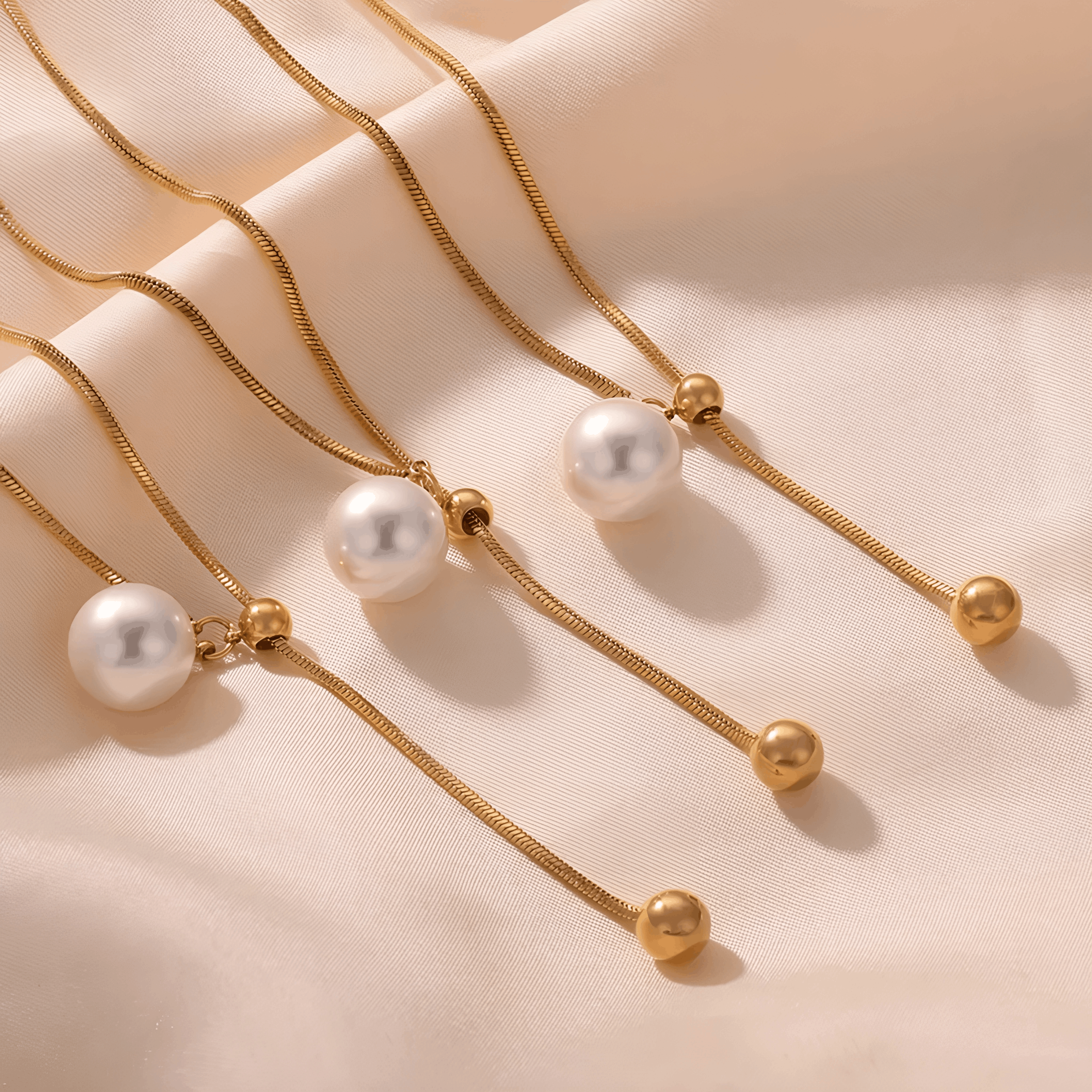
You've stood at your jewellery tray holding three necklaces at once, genuinely uncertain which one wins. It's a familiar kind of pause. The chain that feels right for Monday isn't quite right by Friday, and neither of them is quite right when you're heading somewhere that matters. That's not indecision. That's actually the beginning of good jewellery instinct, and it's worth paying attention to.
Start With the Outfit, Not the Jewellery Box
When people talk about layering jewellery, they tend to jump straight to the fun part: which pieces, which metals, how many. But the real place to start is your outfit, specifically the neckline, the sleeve, the silhouette. Your jewellery isn't separate from what you're wearing. It's adding another verse to a favourite song. Get the base right and everything else slots into place with much less effort.
A deep V neckline already creates a visual line pointing downward, so a long pendant follows that energy naturally. You're working with the clothes, not against them. A crew neck or a top with a collar sitting high wants something that rests above the collarbone, something that interrupts rather than mirrors the fabric. A top that bares the shoulder is practically asking for something that rests along the collarbone or slightly below it. Notice those signals. They're style breadcrumbs and they're everywhere if you know how to look.
Picking Your Anchor Piece
Every good jewellery look has one piece doing most of the work. It doesn't have to be the biggest or the most expensive. It just needs to be the one you built around. Sometimes it's a statement ring. Sometimes it's a chunky chain sitting at the chest. Sometimes it's a pair of jhumkas you're basically constructing an entire outfit around. That's fine. Actually, that's ideal.
Once you've identified your anchor, the rest of your choices get easier because now you're asking a different question. Instead of "what do I wear?", you're asking "what supports this?" A bold earring usually wants a quieter necklace. An intricate layered neck look wants simpler ears. The pieces should complement, not compete. Think of it as jewellery real estate: roughly sixty percent of the visual interest goes to your anchor, and the rest fills in around it.
The Stack That Feels Intentional
Ring stacking is one of those things that looks incredibly effortless on some people and slightly chaotic on others, and the difference almost always comes down to one decision: mixing intentionally rather than randomly.
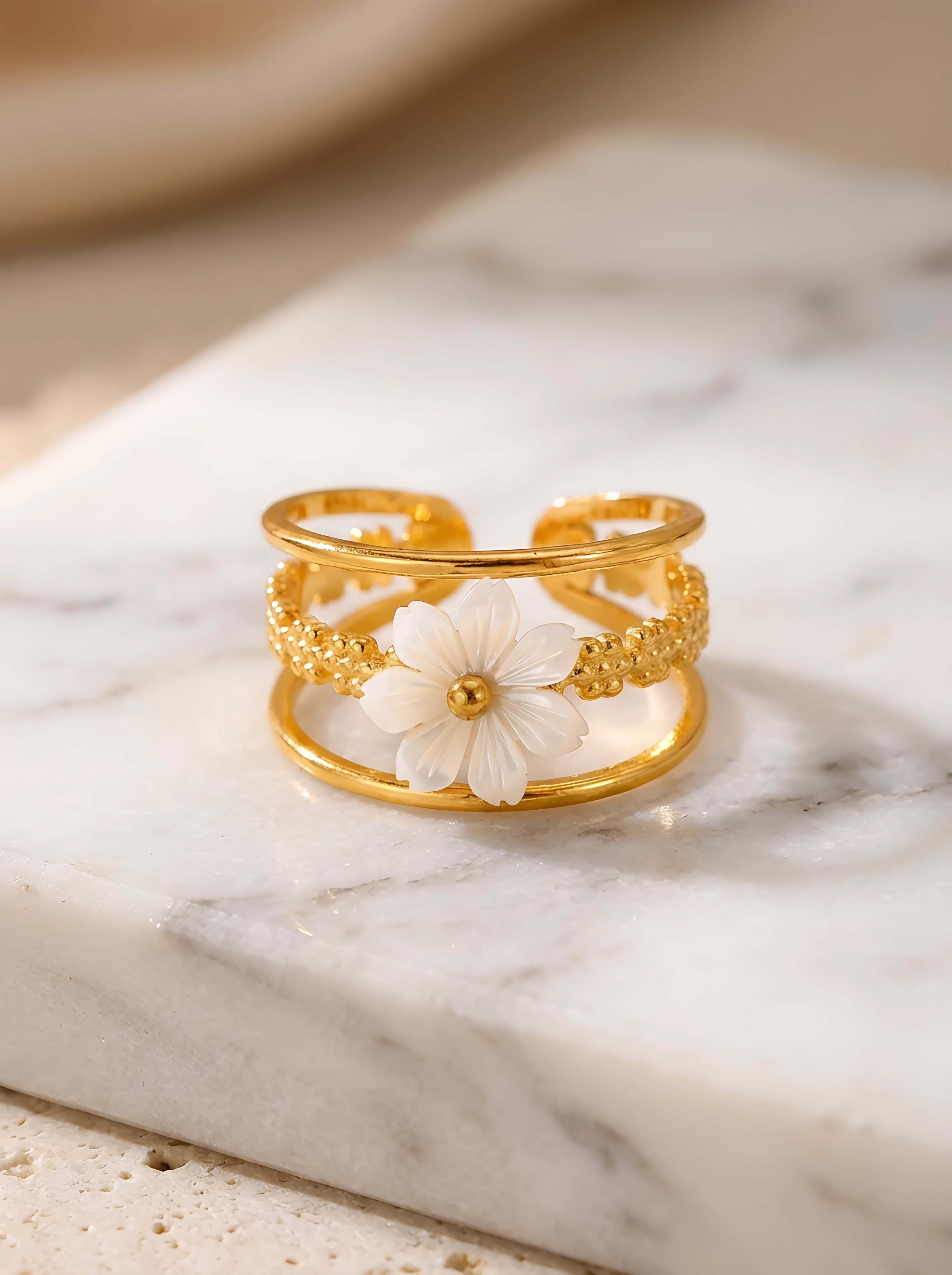
You don't need all your rings to match. You need them to have a conversation. A thin gold band sits beautifully next to a slightly thicker one. A stone ring in a warm tone works beside a plain twisted ring in the same metal family. What you want to avoid is a complete mismatch of finish, where a matte surface and a glossy one fight for attention right next to each other, or where stones of wildly different sizes compete on the same finger. Let the pieces breathe a little. Leave a finger or two bare. Negative space is part of the stack.
Bangles and Bracelets: The Wrist Stack
Your wrists are probably underused jewellery real estate. A single bangle looks understated and quietly elegant. Two or three bangles start to tell a story. Stack in odd numbers if you can: three, five, seven. Odd stacks have a natural visual rhythm that even numbers tend not to.
Mix textures without overthinking it. A hammered cuff alongside a smooth bangle alongside a beaded bracelet works because each one is distinct enough to stand alone but similar enough in tone to read as a group. The gentle weight of metal warming against your skin as the day goes on is part of the pleasure. And if bangles create their own percussion as you move, as they do at every sangeet or Diwali gathering, that's not an accident. That's the whole point.
When You're Dressing for an Occasion
Casual styling and occasion styling follow different rules. In daily life, you want jewellery that works across eighty percent of your wardrobe without requiring much thought. A pair of small gold hoops, a thin chain, a ring or two. These are pieces you reach for on autopilot, and that's exactly what they're supposed to do.
For something more intentional, a dinner, a wedding function, a festive celebration, the calculation shifts. You're not reaching for what's comfortable and familiar. You're thinking about what the moment calls for. Festive occasions in particular are spaces where more is genuinely more. Layered necklaces. Chandelier earrings. Bangles stacked higher than usual. There's a generosity to occasion dressing that everyday styling doesn't always allow, and jewellery is where that generosity shows up most clearly.
Think about what you're celebrating and let your jewellery reflect that. If it's a friend's birthday dinner and you want to feel a little electric, wear the earrings you usually save. If it's a family function and you want to feel connected to something bigger than yourself, reach for the pieces with history. The occasion tells you what the jewellery should say. Your job is just to listen.
The necklace you reach for on autopilot already knows something. Trust it.

